
The artificial intelligence landscape has reached a decisive milestone. Organizations have officially moved beyond early prompting experiments and basic text-generation pilots. Modern enterprises no longer use artificial intelligence simply as an internal drafting assistant or isolated search tool. Instead, they are integrating intelligent systems directly into core operational workflows, connecting autonomous software with enterprise infrastructure, and deriving scalable business value.
To win in this environment, market leaders deploy specific structural strategies that bridge the gap between simple automation and sustainable commercial scale. Transforming organizational execution requires taking fundamental architectural concepts and making them practical, daily realities.
Proven Growth Strategies

+-------------------------------------------------------------------------------+
|                        ENTERPRISE AI ARCHITECTURE                             |
|                                                                               |
|   [ Composable Infrastructure ]  -->  Vertical platforms with clean data       |
|                 |                                                             |
|                 v                                                             |
|   [ "Single Brain" Context Layer ] -->  Unified Slack/Teams knowledge context   |
|                 |                                                             |
|                 v                                                             |
|   [ Task-Specific AI Agents ]    -->  End-to-end autonomous multi-step execution|
|                 |                                                             |
|                 v                                                             |
|   [ Closed-Loop Learning ]      -->  Refines outputs via human & performance feedback |
+-------------------------------------------------------------------------------+
Move to Agentic Workflows
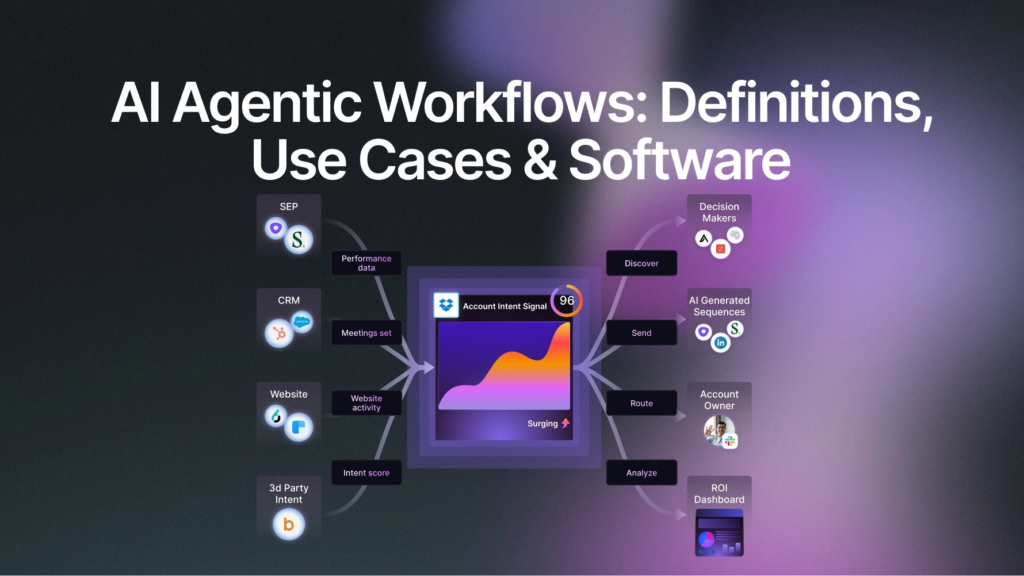
The era of basic chat interface prompts is over. Leading organizations have shifted their operational model to task-specific AI agents that execute entire multi-step business routines autonomously. Instead of relying on a human employee to summarize an email, write a response, copy data into a CRM system, and issue a sales invoice, agentic workflows handle the complete sequence from trigger to final confirmation.
These autonomous agents act as specialized digital workers capable of navigating across multiple software ecosystems without constant step-by-step human intervention. They evaluate complex inputs, interpret conditional logic, execute API actions, and correct minor execution errors independently. By shifting focus from simple text generation to end-to-end task execution, enterprises eliminate operational latency, lower human error rates, and unlock exponential productivity gains across various functional departments.
Build a “Single Brain” Enterprise Layer
A primary point of operational friction in modern companies is fragmented information. Teams routinely lose hundreds of work hours every year context-switching between different software applications, internal documentation libraries, customer message threads, and email inboxes. Enterprise leaders solve this challenge by building a centralized enterprise context layer—a virtual “Single Brain”.
This centralized architecture directly integrates everyday messaging platforms like Slack or Microsoft Teams with all underlying corporate data lakes, file repositories, and enterprise databases. Employees no longer need to spend time searching through multiple siloed databases; they simply ask questions or trigger actions within their daily communication channels. Connecting artificial intelligence directly into existing workplace messaging tools minimizes employee change resistance, reduces training friction, and provides every member of the workforce with instant contextual intelligence.
Implement Closed-Loop Learning

Deploying an intelligent digital framework is not a single software installation; it requires continuous development. Forward-looking businesses utilize closed-loop learning systems that systematically improve software outputs through real-time operational telemetry.
In a closed-loop system, every interaction generates valuable structural signals:
- Human-in-the-Loop Feedback: Explicit approval, rejection, or manual correction of an agent’s output by a human operator.
- Execution Metrics: Direct technical indicators such as task completion rates, query processing speed, and code error logs.
- Customer Satisfaction Signals: Indirect user sentiment metrics, including net promoter scores, resolution rates, and escalation frequency.
These incoming data signals automatically feed back into system fine-tuning loops, continually refining agent decision boundary logic and improving output quality over time without manual code updates.
Prioritize Composable Infrastructure

Generic, one-size-fits-all foundation models rarely possess the nuance required to execute specialized industry work cleanly. High-performing companies utilize composable infrastructure built around specialized vertical platforms. Modular technical stacks give organizations total control over data integration, model orchestration, and security boundaries.
By deploying targeted, domain-specific systems rather than relying entirely on massive generalized tools, enterprises ensure that their proprietary data assets remain unpolluted and secure. Clean, domain-focused data pipelines reduce model hallucinations, guarantee regulatory compliance, and accelerate execution speed, yielding higher returns on technology investments.
Real-World AI Case Studies & Operational Results
| Industry | Implementation Focus | Enterprise Strategy Applied | Quantifiable Outcome & Business Impact |
| Global Financial Services | Fraud Detection & Processing | Task-Specific Agents & Closed-Loop Learning | 90% reduction in fraud losses; cut back-office transaction execution times by 50%. |
| Enterprise Customer Operations | Omnichannel Support Automation | Single Brain Context & Vertical Platforms | Achieved 90% autonomous resolution with 99% response accuracy on routine tickets. |
| Automotive & Manufacturing | Predictive Maintenance & QC | Agentic Workflows & Closed-Loop Learning | 35% drop in plant production defects; boosted maintenance prediction accuracy by 42%. |
| Global Biopharma Agency | Content Localization & Distribution | Composable Infrastructure | Reduced localization speed from 60 days to 1 day; cut agency expenditures by 20-30%. |
Financial Sector: Autonomous Fraud Prevention and Processing

A prominent global financial services enterprise restructured its back-office operation around task-specific autonomous agents to handle rising fraud volumes and transactional backlogs. Rather than relying on simple rule-based software that regularly flagged harmless false positives, the institution implemented multi-agent orchestration systems connected directly to historical transaction logs and device identity databases.
When a flagged transaction occurs, an autonomous agent assesses behavioral telemetry, cross-references historical user interactions, evaluates probability scores, and initiates mitigation workflows in real time. Human review teams step in only during edge cases, providing explicit corrections that continuously update the system’s underlying decision parameters.
- Measurable Results: Back-office financial transaction processing times dropped by 50%, overall fraud incidents decreased by 90%, and regulatory compliance reporting costs fell significantly.
Customer Operations: High-Accuracy Support Systems
A major telecommunications and digital services firm replaced its legacy customer support chatbot framework with a domain-tuned agentic workflow platform. Legacy systems regularly annoyed customers by surfacing irrelevant help documents; the new setup leverages a Knowledge Atlas context layer that dynamically learns directly from successful agent resolutions.
These specialized agents are granted secure backend system privileges. They do not simply explain how to change a subscription or process a refund—they perform the database updates, verify account statuses, issue customer notifications, and mark tickets as complete independently.
- Measurable Results: The company achieved a 90% end-to-end resolution rate without requiring human agent escalation, while maintaining a 99% response accuracy rate across live interactions.
Smart Manufacturing: Predictive Quality Control

In the industrial sector, an international automotive manufacturing company integrated agentic AI modules throughout its assembly facilities to streamline maintenance routines and limit unexpected downtime. Sensor networks streaming real-time thermal, vibration, and performance metrics feed directly into specialized vertical models.
Instead of issuing passive notifications to plant floor workers, the intelligent system places automatic orders for replacement parts, reschedules factory line runs to accommodate repairs, and pushes step-by-step diagnostic workflows to technicians’ mobile devices.
- Measurable Results: Assembly floor production errors dropped by 35%, while predictive maintenance models improved failure forecasting precision by 42%, saving millions in prevented downtime.
Scaling Strategy Blueprint
To move successfully from local technology tests to broad operational deployment, leaders follow a clear execution roadmap:
- Map Multi-Step Workflows: Audit internal teams to locate high-volume routines involving fragmented data transfer across isolated applications. Target workflows where manual coordination slows execution speed.
- Unify Enterprise Context: Consolidate corporate documentation into a secure, searchable single-brain architecture that connects directly with daily chat environments.
- Deploy Specialized Agents: Equip domain-specific digital agents with API access to execute task sequences, reserving human oversight for complex edge cases.
- Establish Continuous Feedback: Build feedback collection mechanisms into human review interfaces to automatically refine operational parameters over time.
Tool Deals & Offers 2026: Discover Top Tools at Better Prices
Digital tools have become an important part of everyday work. Tool Deals & Offers Whether…

Free vs. Paid Tools 2026: Which Tools Are Worth It?
From productivity apps and design software to AI platforms, writing Free vs. Paid Tools assistants,…
Best Tool Deals 2026: Software Discounts & Special Offers
Software has become a daily necessity for work, study, business, Tool Deals content creation, design,…

SaaS Deals 2026: Best Software Discounts, Offers & Lifetime Deals
Running a business, managing client projects, or creating SaaS Deals content in 2026 relies heavily…

Best Tool Tips & Hacks in 2026 to Work Smarter
Let’s be honest: most of us spend Best Tool Tips our workdays performing digital acrobatics…
Stop Paying: 15 Free Tools You Should Try in 2026
Before we dive into the deep details, here is the cheat sheet. This is Free…